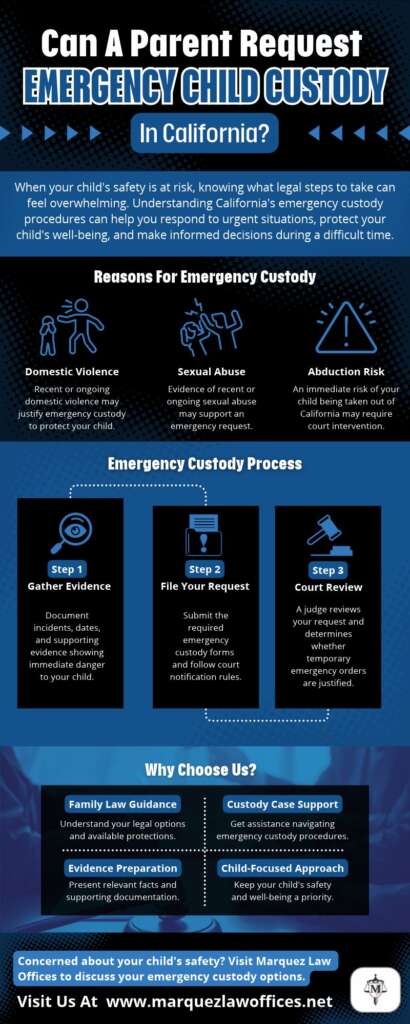

When your child’s safety is at risk, knowing what legal steps to take can feel overwhelming. California law provides emergency custody procedures that may help parents respond to urgent situations and protect their children’s well-being. If your child faces immediate danger, understanding how to request emergency custody can help you take timely action and make informed decisions.
At Marquez Law Offices, we understand how stressful child custody matters can be. Our team can help you understand your legal options, prepare supporting documentation, and navigate the emergency custody process.
Reasons to Request Emergency Child Custody in California
A parent may request emergency child custody when circumstances indicate that a child faces an immediate risk of harm. Some situations that may justify an emergency request include:
1. Domestic Violence
Recent or ongoing domestic violence involving a parent or household member may create an unsafe environment for a child. If there is evidence that your child’s safety is at risk, emergency custody may be an option to seek immediate protection through the court.
2. Sexual Abuse
Allegations or evidence of recent or ongoing sexual abuse involving a child may warrant urgent court intervention. Parents should document relevant incidents and seek appropriate legal guidance to understand the available protective measures.
3. Risk of Child Abduction
If there is an immediate risk that the other parent may take your child out of California or prevent you from maintaining contact, you may be able to request emergency court intervention. Supporting evidence can help demonstrate the urgency of the situation.
How Does the Emergency Child Custody Process Work?
Requesting emergency custody in California generally involves several important steps:
Step 1: Gather Supporting Evidence
Collect relevant documentation that demonstrates the immediate safety concerns involving your child. This may include incident reports, photographs, messages, medical records, witness statements, and other supporting evidence.
Step 2: File Your Emergency Custody Request
Prepare and submit the required emergency custody forms to the appropriate California family court. You must follow the court’s filing and notice requirements, including applicable procedures for notifying the other parent.
Step 3: Court Review and Decision
A judge reviews the emergency request and supporting information to determine whether temporary emergency orders are justified. If granted, these orders may establish temporary custody or other protective arrangements while the court considers the matter further.
Why Choose Marquez Law Offices for Child Custody Matters?
Child custody disputes involving safety concerns require careful attention and a clear understanding of your legal options. Marquez Law Offices can assist you with:
- Family Law Guidance: Understand your legal options and available protections under California law.
- Custody Case Support: Get assistance navigating emergency custody procedures and court requirements.
- Evidence Preparation: Organize relevant facts and supporting documentation for your custody request.
- Child-Focused Approach: Keep your child’s safety, stability, and well-being a priority throughout the legal process.
Speak With Marquez Law Offices About Your Emergency Custody Options
If you are concerned about your child’s safety, taking appropriate legal action may be important. Understanding California’s emergency custody procedures can help you determine the next steps to protect your child.
Contact Marquez Law Offices to discuss your situation and learn about your available legal options.
Website: https://www.marquezlawoffices.net/