
Dividing property is often one of the most challenging and emotionally charged aspects of a divorce. While many people assume property division is simply about splitting assets, the reality is far more complex. From determining the value of shared assets to resolving disputes over debts and business interests, disagreements can quickly arise and prolong the divorce process. Understanding the common causes of conflict can help spouses navigate property division more effectively and work toward a fair resolution.
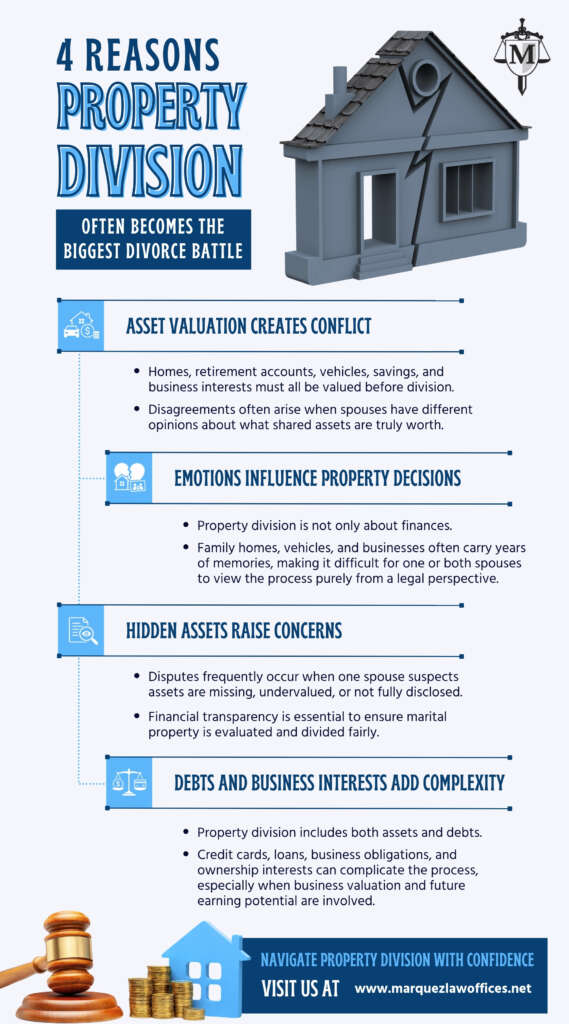
1. Asset Valuation Creates Conflict
Before marital property can be divided, all shared assets must be identified and valued. These assets may include family homes, retirement accounts, vehicles, savings, investments, and business interests. Disputes often occur when spouses disagree about the true value of these assets, especially when market fluctuations or complex financial holdings are involved. Accurate valuation is essential to ensuring a fair distribution of property.
2. Emotions Influence Property Decisions
Property division is not just a financial matter—it is also deeply personal. Family homes, vehicles, businesses, and treasured possessions often carry years of memories and emotional significance. As a result, one or both spouses may find it difficult to separate emotions from practical decision-making. These emotional attachments can make negotiations more challenging and increase the likelihood of conflict.
3. Hidden Assets Raise Concerns
Trust issues frequently emerge during divorce proceedings, particularly when one spouse suspects the other of concealing assets or failing to disclose financial information. Hidden bank accounts, undervalued investments, or undisclosed property can lead to serious disputes. Full financial transparency is critical to ensuring that marital assets are evaluated accurately and divided fairly.
4. Debts and Business Interests Add Complexity
Property division involves more than just assets—it also includes debts and financial obligations. Credit card balances, loans, mortgages, and business liabilities must be considered when determining an equitable division. The process becomes even more complicated when one or both spouses own a business, as business valuation, ownership rights, and future earning potential can significantly affect the outcome.
Navigate Property Division with Confidence
Property division can be one of the most contested aspects of divorce, but understanding the factors that contribute to disputes can help individuals make informed decisions. Seeking experienced legal guidance can provide clarity, protect financial interests, and help achieve a fair resolution. With the right support, spouses can navigate property division with confidence and focus on building a stable future.