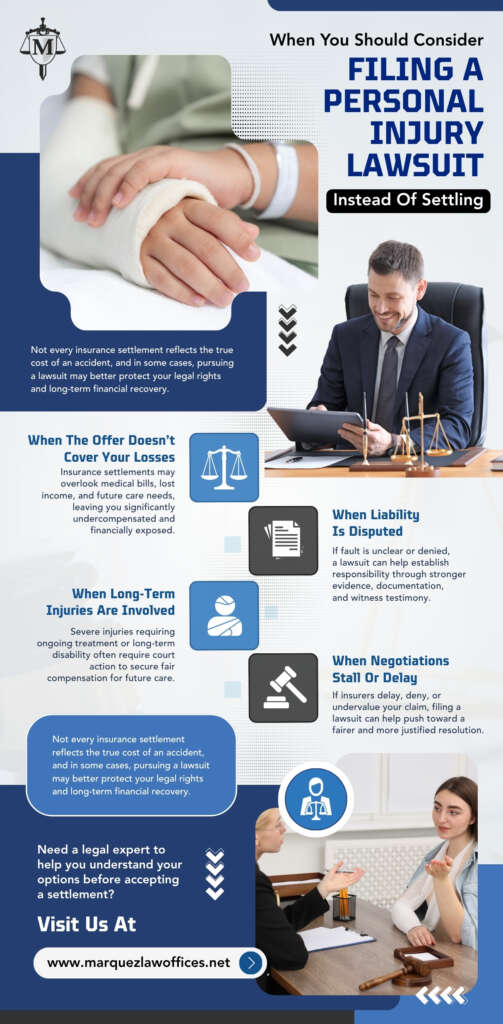

After an accident, accepting an insurance settlement may seem like the quickest way to move forward. However, not every settlement fully covers the physical, emotional, and financial impact of your injuries. In certain situations, filing a personal injury lawsuit may be the best way to protect your rights and pursue the compensation you truly deserve.
When the Settlement Offer Doesn’t Cover Your Losses
Insurance companies often aim to minimize payouts. If the settlement fails to cover your medical expenses, lost wages, rehabilitation costs, pain and suffering, or future financial needs, pursuing legal action may help you recover fair compensation.
When Liability Is Disputed
If the other party denies responsibility or there is uncertainty about who caused the accident, a lawsuit allows your attorney to present evidence, gather witness testimony, and build a strong case to establish liability.
When Long-Term Injuries Are Involved
Serious injuries can require ongoing medical treatment, rehabilitation, or lifelong care. Filing a lawsuit may help secure compensation that accounts for future medical expenses, reduced earning capacity, and long-term recovery needs.
When Negotiations Stall or Are Delayed
If the insurance company repeatedly delays your claim, refuses to negotiate fairly, or undervalues your damages, taking your case to court can encourage a more reasonable resolution and ensure your claim receives proper consideration.
Protect Your Rights Before Accepting a Settlement
Every personal injury case is unique, and accepting an offer too quickly could leave you responsible for expenses that arise later. Consulting with an experienced personal injury attorney can help you understand your legal options and determine whether a lawsuit is the right course of action.